Extra shedding, a widening part, receding temples and a thinner ponytail can point to different conditions, from temporary telogen effluvium to progressive follicle miniaturisation. You will learn how to identify the pattern, recognise warning signs, compare treatment options and know when a treatment plan needs medical review.
Key takeaways
- Daily shedding can be normal when density and the part line remain stable.
- A widening part, shrinking ponytail, or bald patches need scalp assessment.
- Choose treatment after identifying the cause, not from shedding alone.
- Confirm the diagnosis, timeline, risks, and expected results before starting.
Is your hair shedding temporarily, or becoming progressively thinner?
Normal hair shedding daily patterns vary, but losing roughly 50 to 100 hairs a day is commonly within the expected range. Hair comes out evenly, the part line stays similar, and your ponytail does not steadily shrink. More shedding after washing does not prove permanent hair loss.
Temporary diffuse shedding usually starts two to four months after a trigger and improves as the growth cycle resets. Common triggers include:
- Fever, infection, surgery, major stress, or rapid weight loss
- Iron deficiency, thyroid disease, or another nutritional deficiency
- New medicines or changes in hormone-related treatment
Progressive thinning hair follows a different pattern. A widening part, receding temples, a smaller ponytail, or increasing scalp visibility points to follicle miniaturisation, commonly androgenetic alopecia. The hair becomes finer before it disappears, so waiting for bald patches can delay effective hair fall treatment.
Sudden round or smooth patches suggest alopecia areata. Hair loss along tight braids, extensions, or repeated pulling suggests traction alopecia. Scaling, redness, pain, pustules, crusting, or eyebrow loss raises concern for scalp inflammation or scarring alopecia, where delayed treatment can cause permanent loss.
Weak hair that snaps along its length is breakage rather than shedding from the root. A dermatologist can distinguish these patterns with scalp examination, dermoscopy, and a hair-pull assessment, then order targeted blood tests instead of recommending hair vitamins without evidence of deficiency.
Which warning signs mean you need a scalp examination first?
Do not start a cosmetic or regenerative procedure if hair loss comes with sudden patchy hair loss, scalp pain, scalp scaling, pustules and crusting, or a smooth, shiny area where follicle openings have disappeared. Eyebrow loss, rapidly expanding bald areas, bleeding, or marked burning also warrant prompt dermatology review.
Scarring can permanently destroy follicles, so delay can remove the chance of regrowth.
| Warning sign | What it may suggest | Examination priority |
|---|---|---|
| Sudden round patches | Alopecia areata or fungal infection | Dermoscopy; fungal testing when indicated |
| Pain, burning, scale, pustules or crusting | Inflammatory or scarring alopecia | Dermoscopy and possible biopsy |
| Widening loss with redness or heavy shedding | Pattern loss, telogen effluvium or inflammation | Hair-pull test and scalp examination |
| Eyebrow loss or hair loss at multiple sites | Alopecia areata, thyroid disease or scarring | Full skin and hair examination |
A dermatologist may inspect the scalp, examine follicles with dermoscopy, measure shedding with a hair-pull test, and take a 4-mm scalp biopsy when the pattern is unclear. Blood tests depend on your history and examination:
- Complete blood count and serum ferritin, with iron studies if deficiency is suspected.
- Thyroid-stimulating hormone and free thyroxine for thyroid symptoms or diffuse shedding.
- Vitamin B12, folate, vitamin D, or zinc when diet, absorption problems, or other findings justify testing.
- Total testosterone, DHEAS, and prolactin when hair loss accompanies irregular periods, acne, excess facial hair, or infertility.
Which hair-loss treatments match your diagnosis?
The diagnosis determines whether you are preserving miniaturised follicles, treating inflammation, replacing lost follicles, or disguising reduced density. Pattern hair loss usually calls for follicle-preserving treatment; temporary shedding needs its trigger addressed instead.
| Option | Purpose and evidence | Main limitation |
|---|---|---|
| Topical minoxidil | Supports growth in pattern hair loss; benefit requires continuous use. | Scalp irritation, facial hair, early shedding; stopping reverses the benefit. |
| Oral minoxidil | Off-label systemic option under medical supervision. | Hypertrichosis, ankle swelling, dizziness, low blood pressure, or fast heartbeat can occur. |
| Finasteride | Reduces androgen-driven follicle miniaturisation, mainly in men. | Prescription treatment with sexual, mood, and pregnancy-related safety concerns. |
| Spironolactone | Prescription antiandrogen used for some women with pattern loss or androgen excess. | Pregnancy restrictions, menstrual changes, breast tenderness, dizziness, and raised potassium. |
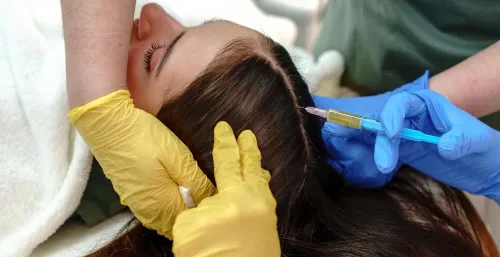
| PRP | Uses concentrated platelets; some studies show increased density. | Protocols and evidence vary, so results are not guaranteed or permanent. |
| GFC | Delivers concentrated growth-factor preparations by injection. | Preparation methods, schedules, and evidence are not standardised. |
| Mesotherapy | Injects selected medicines or nutrients into the scalp. | Mixtures differ widely, and evidence depends on the injected product. |
| Low-level light therapy | May modestly increase density in pattern loss. | Requires ongoing use and does not replace follicles; devices are not interchangeable. |
| Transplantation | Redistributes follicles from a limited donor area. | Needs adequate donor hair and stable planning; it does not stop later loss. |
| Hair patches | Immediately camouflage visible thinning. | They improve appearance, not follicle health, and require fitting and maintenance. |
A clinician should match the option to your examination, diagnosis, medicines, pregnancy plans, and donor supply rather than treating every thinning pattern alike.
Who is eligible for regenerative procedures or a hair transplant, and how long do results take?
Eligibility depends on the diagnosis, scalp health, available donor hair, and realistic expectations—not simply the amount of hair lost. Active infection, scarring alopecia, uncontrolled shedding, or unexplained patchy loss requires diagnosis and treatment before a procedure.
| Option | Eligibility and schedule | Maintenance and review |
|---|---|---|
| PRP for hair | Pattern hair loss with viable follicles; a common plan uses 3 sessions 4–6 weeks apart. | Review at 3–6 months; maintenance may be advised every 6–12 months if improvement is documented. |
| GFC hair treatment | Pattern thinning with living but miniaturised follicles; the clinic must state the number and interval of sessions because protocols differ. | Review after about 3–6 months; repeat sessions are maintenance, not a permanent replacement for lost follicles. |
| Mesotherapy | Only after confirming the diagnosis and the injected ingredients; there is no single validated schedule. | Ask for the drug name, dose, injection interval, risks, and review date before paying for a course. |
| Hair transplantation | Requires a stable diagnosis, adequate hair in the hair transplantation donor area, and enough donor density to meet the plan. | New growth usually appears after 3–4 months and is judged around 9–12 months; medical treatment may protect native hair elsewhere. |
| Hair patches | Suitable when immediate coverage matters or surgery is unsuitable; no follicle eligibility is required. | Cleaning, refitting, and adhesive changes follow the system used; schedule regular checks for scalp irritation, lifting, and thinning beneath the patch. |
A transplant does not stop future loss outside the grafted area. Record baseline photographs and attend the planned review; reassess the diagnosis if shedding accelerates, new patches appear, or the scalp becomes painful, scaly, or inflamed.
What should you confirm before starting a hair-fall plan?
Choose a plan only after a hair treatment consultation confirms the pattern and likely cause. Diffuse shedding, patterned miniaturisation, traction alopecia, patchy alopecia and scarring loss are not interchangeable. Ask whether scalp examination, dermoscopy, a hair-pull assessment or biopsy is needed, and which blood tests fit your history.
- Check for a nutritional deficiency, thyroid disease or systemic illness before buying hair vitamins. Correct documented problems; high-dose biotin can distort thyroid and cardiac-injury tests, so disclose it before bloodwork.
- Bring a list of medicines, recent illness, weight change, stress and pregnancy plans. Ask what improvement should look like, when it will be measured and what happens if shedding continues.
- At Derma Elementts 08048039637, ask for the diagnosis and review date in writing rather than choosing PRP, GFC or a transplant from photographs alone.
| Option | Confirm before starting | Review the plan when |
|---|---|---|
| Topical or oral minoxidil | Topical products can irritate; oral minoxidil needs supervision because dizziness, swelling, low blood pressure and fast heartbeat can occur. | Irritation persists, or systemic symptoms appear. |
| Finasteride | Discuss sexual or mood effects; women who are pregnant or may become pregnant should not use it. | Benefits require continued treatment, or adverse effects develop. |
| PRP or GFC | Confirm the injection schedule, protocol and outcome measure; results are not guaranteed or permanently restorative. | No measurable change at the agreed review. |
| Transplant | Confirm adequate donor hair and stable diagnosis; it redistributes follicles and does not stop loss elsewhere. | Native hair keeps thinning or donor planning was premature. |
Related services
PRP Treatment for Hair in Koregaon Park, Kalyani Nagar,Pune & PCMC PRP Treatment for Hair in Koregaon Park,Pune & PCMC Advanced Hair Regrowth Therapy by Dr. Rupali Patil and she is one of the leading and best Hair treatment specialist in Pune and PCMC. View service → |
Best GFC Treatment Specialist in Koregaon Park, Kalyani Nagar,Pune & PCMC Derma Elementts Clinic located at Koregaon Park and led by one of the Leading and best Hair Treatment Specialist in Pune and PCMC. View service → |
Frequently asked questions
How can you tell temporary shedding from progressive thinning?
Temporary shedding often follows a trigger and leaves overall density stable. Progressive thinning shows a widening part, a shrinking ponytail, or gradually reduced coverage.
Which warning signs mean you need a scalp examination first?
Arrange an examination for bald patches, scalp pain or scaling, sudden heavy shedding, recession, rapid thinning, or eyebrow loss.
How are hair-loss treatments matched to the diagnosis?
Treatment depends on the cause, such as pattern hair loss, telogen effluvium, alopecia areata, scalp inflammation, nutritional deficiency, or another medical condition.
Who may be eligible for regenerative procedures or a hair transplant?
Eligibility depends on the diagnosis, donor-hair supply, scalp health, stability of hair loss, and realistic expectations. A consultation is needed before choosing either procedure.
What should you confirm before starting a hair-fall plan?
Confirm the diagnosis, treatment purpose, expected timeline, side effects, maintenance needs, total sessions, recovery, and follow-up plan.
Related services
Best Hair Transplant Treatment in Koregaon Park, Kalyani Nagar,Pune & PCMC Derma Elementts Clinic located at Koregaon Park, are recognised as one of the leading and best Hair Transplant Clinic in Pune and PCMC. View service → |
Best Meso Stem Cell Therapy in Koregaon Park, Kalyani Nagar Pune & PCMC If you are looking for advanced Meso Stem Cell Therapy in Pune and PCMC, Derma Elementts Clinic offers one of the most effective and scientifically... View service → |