Pimples that look alike can need different treatment: blocked pores, inflamed acne, folliculitis, rosacea and irritation do not respond to the same routine. You will learn how to identify warning signs, build a tolerable first-line plan, recognise when prescription care is needed, and choose a sensible dermatology consultation in Pune.
Key takeaways
- Deep, tender nodules and cysts need medical assessment to reduce scarring risk.
- Start with a simple routine matched to your breakout type.
- Introduce one acne active at a time and increase use gradually.
- Book a consultation when acne persists, scars, or fails to improve.
Which Type of Breakout Do You Have?
Look at what each bump contains, how it feels, and where it appears. Comedonal acne produces blackheads and whiteheads without significant pain; inflammatory papules are red, solid bumps, while pustules have visible white or yellow fluid. Nodules and cysts are deep, tender lumps that carry a higher risk of scarring and need medical assessment.
| Pattern | What it suggests | What makes it different |
|---|---|---|
| Comedonal acne | Blackheads and whiteheads | Not usually itchy or deeply painful |
| Inflammatory papules and pustules | Red acne bumps, sometimes with pus | Picking increases marks and scars |
| Nodules and cysts | Firm or soft, painful lumps under the skin | Home extraction can worsen injury; seek a dermatologist |
| Fungal folliculitis | Many similar, itchy bumps, often on the forehead, chest or back | Usually lacks blackheads and may worsen with oily products or antibiotics |
| Rosacea | Flushing, persistent central facial redness, burning and small bumps | Blackheads are uncommon; acne treatment alone may irritate it |
| Irritant or contact reaction | Burning, scaling, redness or bumps after a new product | Starts where the product was applied and improves when it is stopped |
Dark marks after acne are often post-inflammatory hyperpigmentation, not scars. Depressed rolling, boxcar and ice-pick scars, or raised hypertrophic scars, require different treatment; a generic scar procedure may miss the problem.
Book an assessment for painful deep lesions, sudden widespread acne, scarring, irregular periods, excess facial hair, or no improvement after six to eight weeks of consistent basic care. Do not squeeze inflammatory pimples.
What Should Your First Acne Routine Contain?
Start with a routine you can follow for 12 weeks, applying treatment to the acne-prone areas rather than dabbing only on visible pimples. Keep one main active at first; several irritating products make it difficult to identify the cause of peeling or burning.
- Morning: wash with a gentle, fragrance-free cleanser. Apply benzoyl peroxide in a thin layer if inflamed pimples are the main problem, then use a non-comedogenic moisturiser and broad-spectrum SPF 30 or higher.
- Evening: cleanse again, wait until your skin is dry, and apply a pea-sized amount of adapalene across the entire acne-prone area. Follow with moisturiser, or apply moisturiser first if dryness is a concern.
- If blackheads and whiteheads dominate, choose salicylic acid instead of adding it immediately to adapalene. Use a product formulated for facial skin and stop if persistent burning develops.
- Start adapalene or benzoyl peroxide on alternate nights, or rinse benzoyl peroxide off after a short contact period, then increase use as your skin tolerates it.
- Keep hair oils, pomades and heavy styling products away from your forehead and hairline. Choose oil-free or non-comedogenic cosmetics, while remembering that these labels cannot guarantee a product will suit you.
Never use a topical antibiotic alone. If you are pregnant or trying to conceive, avoid adapalene and ask a clinician whether azelaic acid is suitable; do not change acne treatment without that advice. Review progress at 12 weeks.
How Do You Start Acne Actives Without Abandoning Them?
Start with one active, not a crowded routine. Apply a pea-sized amount of alternate-night adapalene to completely dry skin, spreading it over acne-prone areas rather than placing it only on visible pimples. If pregnancy is possible or you are trying to conceive, avoid topical retinoids and ask a clinician whether azelaic acid suits you.
Increase treatment in measured steps:
- Use adapalene every other night for two weeks.
- Apply a non-comedogenic moisturiser after treatment; use it before adapalene if your skin is very sensitive.
- If dryness and peeling remain mild, move to nightly use after two to four weeks.
- If stinging or redness persists into the next day, pause for several nights and restart less often.
- Add another active only after your skin is comfortable; changing several products at once hides the cause of irritation.
Skin purging describes temporary small breakouts in areas where you already get acne after starting a retinoid. It should not cause intense burning. New acne in previously clear areas, marked swelling, blistering, severe itch, or worsening redness points to irritation, allergy, or another diagnosis rather than useful purging.
Stop the product and seek medical advice if those symptoms appear.
Expect several weeks before judging the result. A treatment that causes manageable flaking is not automatically failing, but persistent irritation means the schedule needs adjustment.
When Are Prescription Acne Treatments Appropriate?
Prescription treatment becomes appropriate when acne is painful, deep, scarring, widespread, or still active after a properly used 12-week topical plan. A dermatologist chooses the treatment according to lesion type, pregnancy plans, medical history and medicines you take.
- Topical antibiotics can help inflammatory pimples, but never use them alone. Pairing them with benzoyl peroxide reduces antibiotic resistance, and the regimen needs review at about 12 weeks.
- Oral antibiotics, usually a tetracycline, suit moderate-to-severe inflammatory acne when topical treatment is insufficient. Avoid them during pregnancy and while trying to conceive; improvement is assessed rather than continuing them indefinitely.
- Combined oral contraceptives can suit adult women with lower-face or jawline acne when contraception is acceptable and there is no clotting risk, migraine with aura or other contraindication.
- Spironolactone can help hormonally patterned acne in some women, after checking pregnancy status, blood pressure, kidney health and interacting medicines. It is not an instant spot treatment.
- Isotretinoin is reserved for severe acne, acne threatening permanent scars, or acne that has not responded adequately to standard therapy.
Safety checks matter most with systemic treatment. Before isotretinoin, the clinician discusses fetal harm, pregnancy prevention and testing, dry skin and lips, mood symptoms, drug interactions, and liver enzymes and blood lipids when indicated. Do not combine it with vitamin A supplements or tetracycline antibiotics.
Reassess promptly for severe headache, vision changes, abdominal pain or marked mood changes.
When Should You Book an Acne Consultation in Pune?
Book an acne consultation within days if you have painful deep lumps, nodules, cysts, sudden widespread breakouts, or marks that are becoming permanent. Arrange assessment sooner if acne appears with irregular periods, excess facial hair, a new medicine, or rapid worsening.
If basic care has not produced clear improvement after six to eight weeks, see a dermatologist for acne Pune patients can access rather than repeatedly changing products. Picking and squeezing inflammatory pimples increases tissue injury; professional extraction suits selected comedones, not uncontrolled acne.
| Symptom | What it may indicate | What to ask about |
|---|---|---|
| Painful nodules or cysts | Deeper inflammation with higher acne scarring risk | Prescription treatment and early scar prevention |
| Jawline acne with irregular periods or facial hair | Possible hormonal contribution | Hormonal assessment and treatment safety |
| Flat brown or grey marks after healing | Post-inflammatory hyperpigmentation, not a depressed scar | Sunscreen, inflammation control and pigment treatment |
Expect the first review after about six to eight weeks, with further visits based on irritation, new lesions and scarring. Do not judge treatment by one clearer week; track new painful lesions, healing time and new marks with weekly photographs.
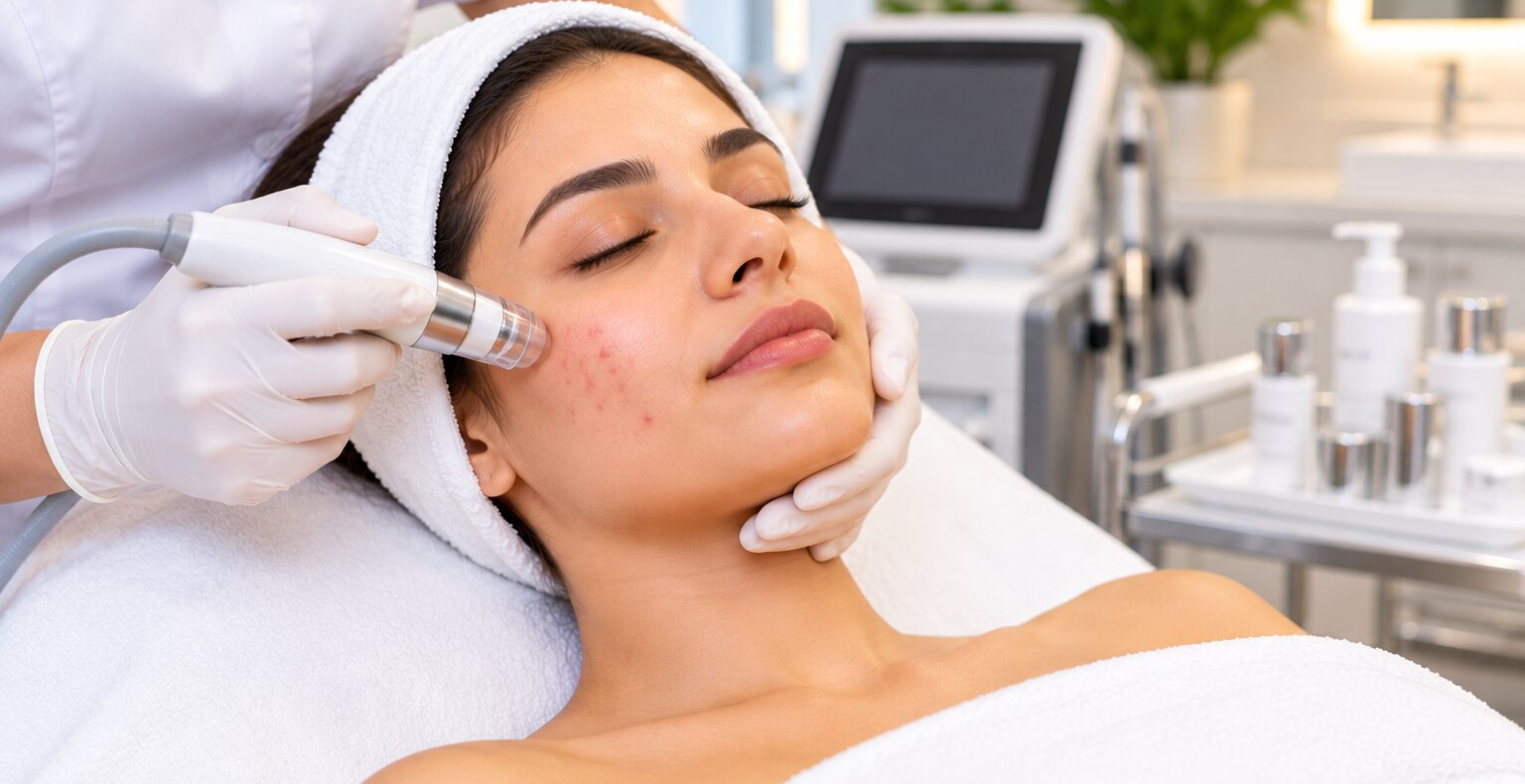
Before choosing chemical peels and laser, ask which problem is being treated: active acne, pigment, rolling scars, boxcar scars, ice-pick scars or raised scars. Procedures do not automatically replace medication, and darker skin needs a pigmentation-risk plan. At Derma Elementts 08048039637, ask for scar classification and a staged plan before agreeing to any procedure.
Frequently asked questions
How can you identify your type of acne breakout?
Blackheads and whiteheads indicate comedonal acne; red solid bumps are papules; white- or yellow-fluid lesions are pustules. Deep, tender lumps are nodules or cysts.
What should your first acne routine contain?
Build a basic routine around gentle cleansing, non-comedogenic moisturising, and daily broad-spectrum sunscreen before adding acne actives.
How should you start acne actives?
Introduce one active at a time, use it at a low frequency, and increase gradually as your skin tolerates it.
When should you seek prescription acne treatment or a consultation in Pune?
Seek medical assessment for nodules, cysts, scarring, persistent acne, or breakouts that do not improve with a consistent routine.