Fine lines do not all form for the same reason, so Botox is useful for some expression lines and poorly matched to others. You will learn how to identify suitable treatment areas, what an appointment involves, when results should be judged, and which questions help you choose safe care in Pune.
Key takeaways
- Botox works best on expression lines that fade when your face relaxes.
- Ask about medical history, medicines, allergies, and the injector’s qualifications.
- Expect gradual results; follow aftercare instructions and avoid rubbing injection sites.
- Compare Pune providers by consultation quality, product traceability, and follow-up care.
Which Fine Lines Respond Best to Botox?
A line that appears when you frown, raise your eyebrows, or smile but fades when your face relaxes is a dynamic wrinkle. Forehead lines, glabellar lines between the eyebrows, and crow’s-feet at the outer eyes often follow this pattern.
| Area | Dynamic clue | Static clue |
|---|---|---|
| Forehead | Appears when raising eyebrows | Remains at rest from sun damage, texture, or laxity |
| Glabella | Deepens while frowning | Stays visible between expressions |
| Crow’s-feet | Forms with smiling or squinting | Remains etched around the eyes |
Botulinum toxin temporarily reduces acetylcholine-driven nerve signals to selected muscles. The muscle contracts less, so repeated skin folding softens; Botox does not fill a crease or repair damaged skin. It is therefore best suited to dynamic wrinkles, not every type of fine lines.
Static wrinkles that remain visible at rest can reflect pigment, rough texture, scars, deeply etched skin, laxity, or lost volume. Daily broad-spectrum sunscreen, moisturiser, and a medically suitable topical retinoid can address photoageing, while resurfacing may improve texture or scars and filler may restore selected areas of volume.
In the United States, Botox Cosmetic is FDA-approved for temporary improvement of moderate-to-severe glabellar lines, lateral canthal lines, and forehead lines when treated with glabellar lines. If you are considering Botox treatment Pune, ask the clinician to identify the wrinkle’s cause before recommending injections.
What Should a Consultation Check Before Injection?
A Botox consultation Pune should begin with a facial-expression assessment, not a request to copy a frozen look. The clinician watches your face at rest and while you raise your brows, frown, squint, and smile. They assess brow position, upper-face muscle strength, lines during movement and at rest, skin quality, and compensatory forehead activity.
| Finding | What the clinician checks | Why it matters |
|---|---|---|
| Dynamic line | Appears with movement and softens at rest | Muscle relaxation may help |
| Static line | Remains visible at rest | Toxin will not fill the crease or repair skin |
| Frontalis activity | Brow elevation and forehead compensation | Prevents excessive brow or eyelid lowering |
Forehead Botox needs particular caution because the frontalis lifts the brows. Treating it without accounting for that role can remove necessary lift, creating brow heaviness risk, eyebrow drooping, or upper-eyelid drooping. Placement, dose, and dilution must match your anatomy.
Answer these questions before injection:
- Is there an infection at the proposed injection site?
- Do you have a neuromuscular disorder?
- Have you had swallowing or breathing problems?
- Have you experienced a significant reaction to botulinum toxin?
- Are you pregnant or breastfeeding?
Postpone or reconsider treatment when infection is present. Pregnancy or breastfeeding requires an individual risk discussion, not an assumption of safety.
Choose a qualified, trained medical professional who understands facial anatomy, correct placement, dose, and dilution. Ensure the clinician records your informed consent, including expected benefits, alternatives, and risks, before treatment.
What Happens During a Botox Injection Appointment?
A Botox appointment is usually brief. The clinician will explain the Botox treatment steps, confirm your goals, review your medical history, and check for issues that could affect treatment.
1. They assess your face at rest and during expressions such as raising your eyebrows, frowning, and smiling. This shows which muscles create the lines and how strongly they move.
2. They mark or map the selected muscles and injection points. Careful planning helps avoid nearby muscles that control the brow or eyelid.
3. You review the plan, possible benefits, alternatives, and risks before giving informed consent. Ask questions before signing.
4. The skin is cleansed to reduce contamination at each injection site.
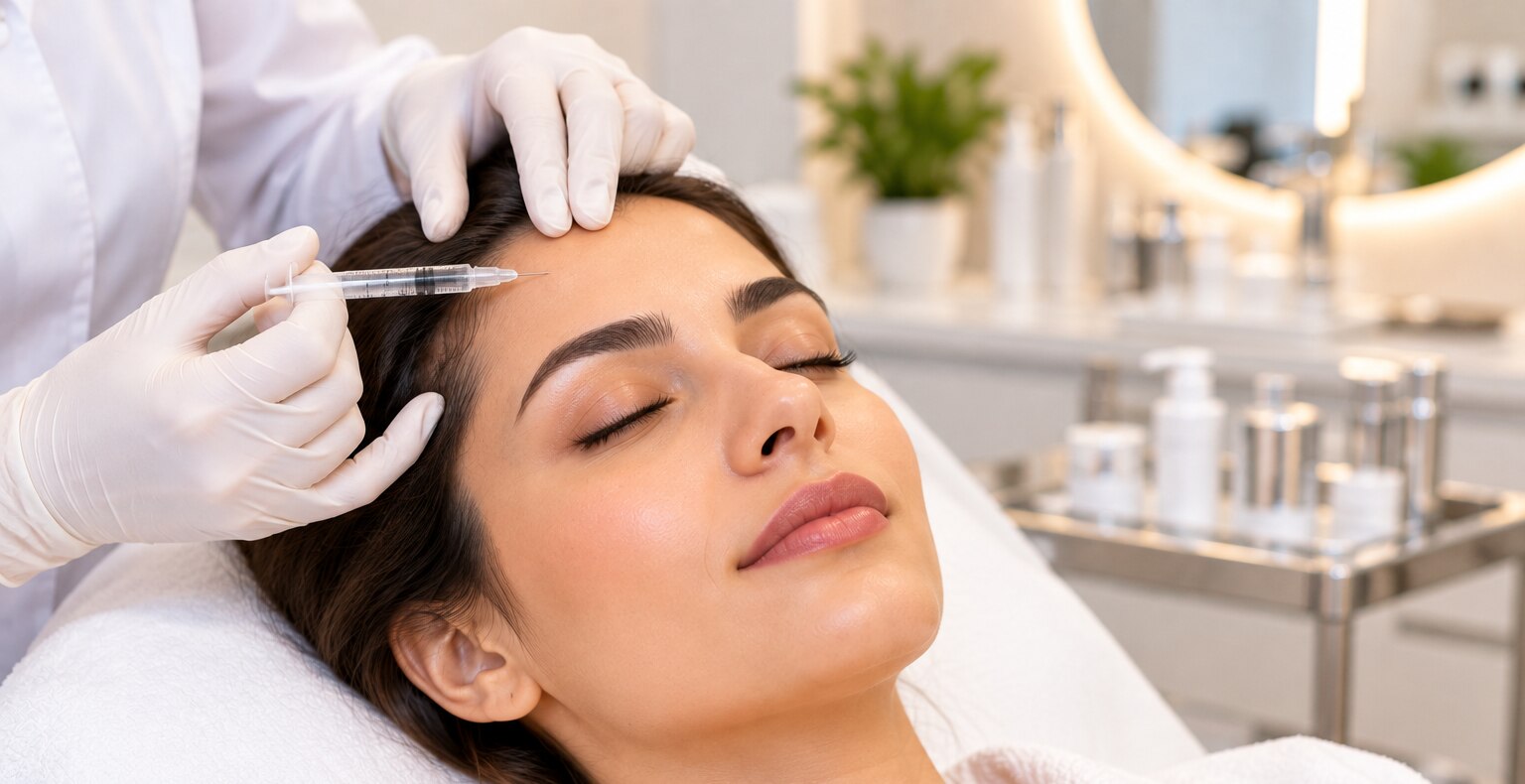
5. The clinician administers small amounts through fine needle injections. Most patients describe a quick pinch or brief stinging sensation. An anaesthetic for Botox is not usually required, although cooling, topical numbing, or another comfort option depends on the clinician and treatment area.
Short-term effects can include injection-site pain, redness, swelling, bruising, headache, and temporary muscle weakness. Botox does not paralyse the entire face when muscles are properly selected and dosed. Incorrect placement, dose, or spread can affect nearby muscles, causing brow or eyelid drooping.
Seek urgent care for widespread weakness, double vision, trouble swallowing, breathing difficulty, or speech problems.
When Will Results Appear, and What Aftercare Is Sensible?
Movement reduction develops over several days; the appearance is usually assessed at 10 to 14 days. Benefit commonly lasts about three to four months, then muscle activity gradually returns. That is the practical Botox results timeline, although duration varies with dose, muscle strength, treatment area, metabolism, and individual response.
Requesting an immediate Botox touch-up is inappropriate because the product has not reached its full effect. Your clinician needs to review the settled result before considering a limited adjustment.
Sensible Botox aftercare includes:
- Do not rub or massage the injection sites, because pressure can irritate the skin and interfere with the clinician’s intended placement.
- Ask the treating clinician when you can resume exercise; the answer depends on the treated area and your procedure.
- Follow their specific instructions about lying flat, heat exposure, and applying makeup rather than relying on rigid internet rules.
Mild redness, tenderness, swelling, bruising, or headache can occur after injections. Contact the clinic if a local reaction worsens or concerns you. Seek urgent medical attention for generalized weakness, double vision, difficulty swallowing, breathing difficulty, or speech problems. These symptoms can indicate spread of botulinum-toxin effects beyond the injection site.
How Can You Compare Botox Providers in Pune?
Compare a Botox clinic Pune by the clinician, assessment, product plan, and safety process—not by location or promotional claims. Ask these Botox consultation questions before booking:
- Who will inject, and what medical qualification and facial-anatomy training does the qualified Botox injector hold?
- Which areas do you recommend, and why? How do you distinguish movement-related dynamic lines from static lines caused by sun damage, etched skin, laxity, or volume loss?
- Which botulinum-toxin product and dose are planned for each area?
- How will you record informed consent, explain risks, arrange follow-up, and handle complications?
| Assessment | Appropriate discussion | Warning sign |
|---|---|---|
| Dynamic forehead, glabellar, or crow’s-feet lines | Targeted muscle relaxation | Injection offered without observing movement |
| Sun damage or etched lines | Sunscreen, skincare, or resurfacing | Botox promised to repair skin texture |
| Volume loss or deep folds | Filler or another volume-based option | Every crease treated with toxin |
A responsible provider explains alternatives when muscle relaxation will not address the cause. At Derma Elementts 08048039637, use the same checklist and judge the clarity of the assessment and safety plan.
Botulinum toxin carries a boxed warning about rare spread of effects. Seek urgent care for unexpected breathing, swallowing, speech, or vision problems, or widespread weakness; do not wait for a routine follow-up.
Frequently asked questions
Which fine lines respond best to Botox?
Botox responds best to dynamic wrinkles caused by facial movement, including forehead lines, glabellar lines between the eyebrows, and crow’s-feet. Lines visible when your face is relaxed need a separate assessment.
What should a Botox consultation check before injection?
The consultation should review your medical history, medicines and supplements, allergies, previous injections, pregnancy or breastfeeding status, and the movement causing each wrinkle. The provider should also explain expected results, risks, and alternatives.
What happens during a Botox injection appointment?
The injector assesses facial movement, marks treatment points, cleans the skin, and uses a fine needle to place small injections into selected muscles. The appointment usually includes instructions for the first several hours and a follow-up plan.
When do Botox results appear?
Movement usually reduces gradually rather than immediately. Your provider should explain the expected review point and whether a follow-up assessment is needed.
How can you compare Botox providers in Pune?
Compare the injector’s medical qualifications, consultation process, product and batch traceability, treatment plan, complication guidance, and follow-up access rather than choosing on price alone.