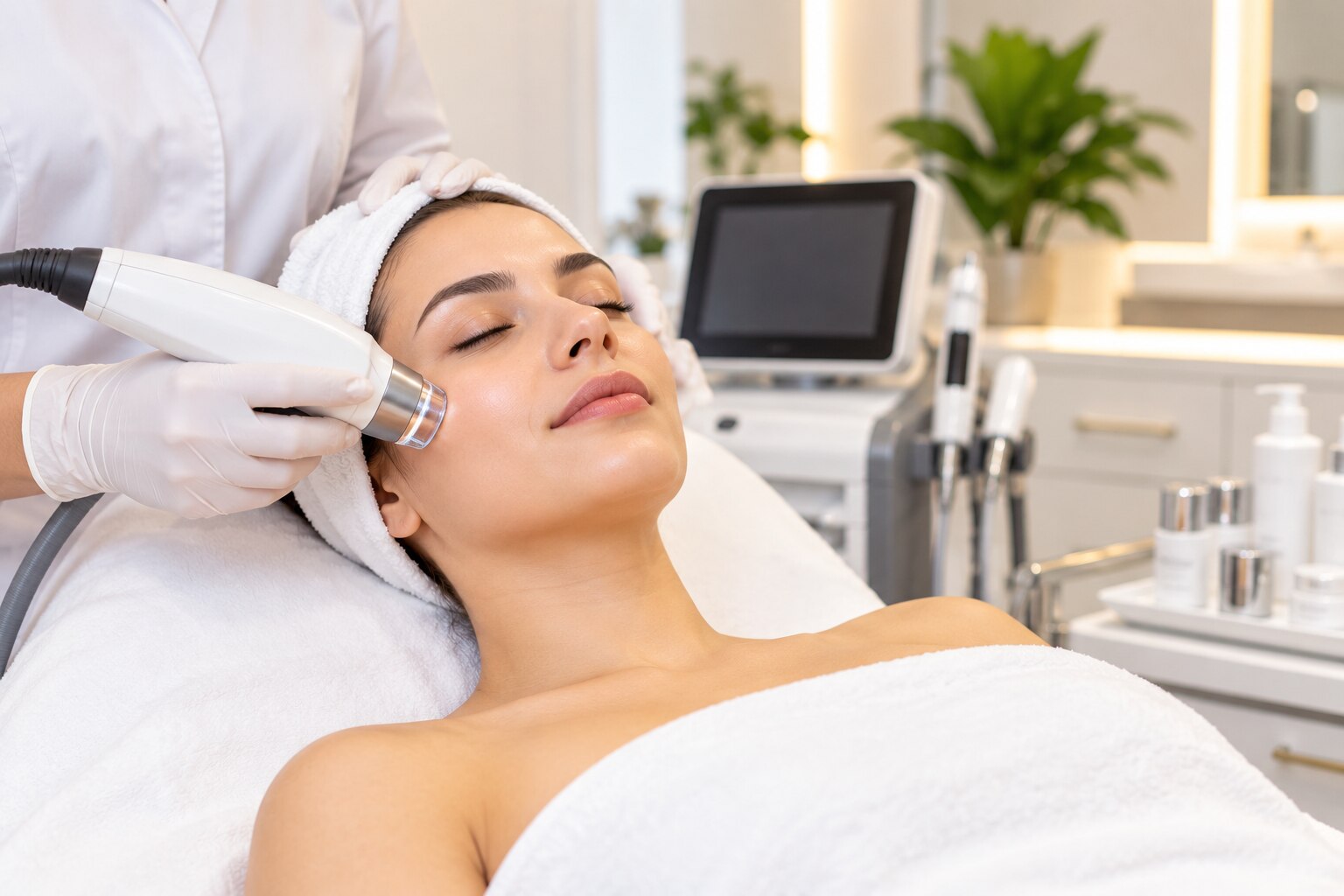
Choosing a skin clinic requires more than comparing procedure menus or before-and-after photographs. You need to know whether the clinic identifies the condition correctly, explains safer alternatives, manages risks in Indian skin types, and measures improvement realistically.
Key takeaways
- Bring your medical, skincare, allergy and treatment history to the consultation.
- Compare diagnosis, treatment reasoning, follow-up and safety practices—not package prices alone.
- Ask how the dermatologist will manage pigmentation, melasma or facial hair risks.
- Choose hair-restoration advice based on diagnosis, expectations and a clear treatment plan.
What should happen during a healthy-and-clear-skin consultation?
A credible healthy skin consultation begins with your history, not a fixed package. In a dermatologist consultation Pune patients can trust, expect questions about medical conditions, medicines and supplements, allergies, previous treatments, menstrual or hormonal history when relevant, daily skincare, sun exposure and symptom timing.
Prepare for the appointment by bringing:
- Photographs of every skincare product, including the ingredient list
- Names, doses and schedules of medicines and supplements
- Previous prescriptions, laboratory reports and procedure records
- Clear photographs showing how the concern changes over time
The dermatologist should examine your skin in person and assess acne, post-acne marks, melasma, pigmentation, uneven texture, redness, sensitivity, dryness, premature ageing and suspected skin disease.
A proper acne diagnosis Pune patients seek must distinguish acne from rosacea, folliculitis, perioral dermatitis and steroid-induced eruptions: these conditions can look alike but need different medicines, and treating the wrong one can worsen it. You should leave with the diagnosis and a written clear skin treatment plan covering alternatives, expected timeline, risks and follow-up.
The clinic may take standardised photographs, arrange a patch test before a product or procedure, and schedule review visits when treatment response or side effects need monitoring.
How can you compare skin clinics in Pune before booking?
Compare the person and process, not the machine or décor. A search for “best dermatologist Pune” is only a starting point: a dermatologist-led clinic diagnoses you before proposing treatment, unlike a salon, beauty centre or injectables-only practice that may sell a fixed procedure.
Indian Medical Register dermatologist verification should be part of your check. Ask for the treating doctor’s qualification and registration number, then confirm who examines you, prescribes, performs each procedure and manages complications.
| Clinic type | Evidence to look for | Warning sign |
|---|---|---|
| Dermatologist-led | Diagnosis, written plan, consent and follow-up | Procedure before examination |
| Salon or beauty centre | Non-medical cosmetic services | Medical claims without a doctor |
| Injectables-only practice | Named prescriber and emergency plan | Same injection for every concern |
Use this skin clinic comparison checklist before booking:
- Ask for the diagnosis, treatment record, expected session count, downtime, maintenance cost and realistic outcome.
- Confirm transparent pricing, alternatives, consent forms, review access and who handles adverse effects.
- Ask how reusable equipment is sterilised, how sharps enter puncture-resistant containers, and how waste is segregated under India’s Biomedical Waste Management Rules.
- Require the actual peel agent, concentration, pH, contact time and preparation—not only a brand name.
A clinic recommending the same peel, laser or injection for acne, pigmentation, scars and redness has skipped individual assessment. That is a warning sign, not consistency. Verify it is an infection control skin clinic before paying.
How should a dermatologist choose between medicines and procedures?
Diagnosis, severity, skin type, medical history, budget, downtime tolerance and desired outcome determine whether medicines or procedures make sense. Topical or oral medicines are often the sensible starting point for active acne; active acne versus acne scars and dark marks requires separate assessment.
| Problem | Possible direction | What to verify |
|---|---|---|
| Active acne | Topical or oral medicines | Diagnosis, contraindications and review date |
| Rolling scars | Subcision, sometimes combined treatment | Whether tethering is present and how bruising will be managed |
| Ice-pick scars | Focal chemical reconstruction such as TCA CROSS | Acid concentration, application technique and pigmentation risk |
| Boxcar scars | Resurfacing or surgical techniques | Depth, device or method, sessions and downtime |
No single laser or peel treats every scar type. For acne scar treatment Pune searches, reject fixed packages that ignore scar morphology.
Ask what each procedure addresses, why a less invasive option is insufficient and how complications will be treated. A chemical peel consultation should document the agent, concentration, pH, contact time, skin preparation and expected downtime—not just a brand name. Burns, infection, prolonged redness, scarring or darker marks can follow poor selection.
For pigmentation, ask whether laser or microneedling for pigmentation is appropriate, and how post-inflammatory hyperpigmentation will be reduced. Injectables and regenerative procedures also need a defined target, protocol, evidence limits, consent, follow-up and a plan for adverse effects.
What risks matter for pigmentation, melasma and facial hair?
Post-inflammatory hyperpigmentation risk is material in Indian skin types after lasers, strong peels, microneedling and other inflammatory procedures. The darker complexion is not a reason to avoid every procedure, but it demands cautious risk management; excessive inflammation can leave darker patches that last longer than the original problem.
1. Ask for conservative settings, a clear reason for the procedure and a test spot when the treatment or your skin history makes it relevant. Confirm the expected downtime and what happens if pigmentation develops.
2. Use strict, broad-spectrum sunscreen as directed and reduce direct sun exposure. When visible light could worsen pigmentation, ask whether a tinted sunscreen containing iron oxides suits you; ordinary sunscreen does not provide the same visible-light protection.
3. Treat melasma as chronic and relapsing. For melasma treatment Pune clinics should explain that a peel or laser can improve colour but cannot guarantee permanent clearance, and maintenance may be needed.
During a laser hair removal consultation, confirm that the goal is long-term reduction, not guaranteed permanent removal. Multiple sessions and maintenance are common, especially when facial hair hormonal causes drive regrowth.
Rapid hair growth, irregular periods, virilisation or sudden worsening warrants assessment for polycystic ovary syndrome, medication effects or another hormonal disorder before treating the hair alone.
What should you expect from hair-restoration advice at a skin clinic?
A credible hair-restoration consultation starts with a diagnosis, not a fixed transplant package. At a hair transplant consultation, Pune patients should receive documentation of the loss pattern, likely cause, donor density, miniaturisation and expected future progression. The clinician must explain that transplantation redistributes existing follicles; it cannot create unlimited hair or guarantee permanent coverage.
FUE is not scar-free. Punches can leave small hypopigmented or depressed scars, while overharvesting can exhaust the donor area and create an unnatural result later. Ask for an FUE donor area assessment and a comparison with strip surgery based on your hair characteristics, goals and donor supply.
The plan should also protect native hair. Discuss minoxidil hair loss treatment and, when appropriate, prescription antiandrogens, including contraindications, side effects and monitoring. For PRP, request a written PRP hair treatment protocol covering:
- Platelet concentration and preparation method
- Activation method, injection sites and schedule
- Number of sessions, maintenance plan and outcome measures
- Evidence limitations and what happens if it fails
A guarantee is a warning sign; PRP is not a standardised substitute for diagnosis, medication or transplantation.
How do you judge whether a clinic is a good fit after the consultation?
Choose the clinic only when success is measurable: fewer active lesions, lower pigment contrast, smoother scar texture, less redness, reduced hair shedding, or better donor planning. “Clear skin” alone is not a useful endpoint.
| Promise | Decision-ready definition | Warning sign |
|---|---|---|
| Acne or redness | Lesion count or redness assessed in standardised photographs | “Glow” without a baseline |
| Pigmentation or scars | Contrast or texture compared under consistent conditions | Guaranteed permanent clearance |
| Hair treatment | Shedding tracked, or donor limits documented | Unlimited regrowth claims |
Ask for:
- The number of visits, preparation, patch testing, downtime, sun-protection requirements and maintenance schedule.
- The complete skin treatment cost and downtime, including medicines, reviews and maintenance.
- Common and serious adverse effects, plus who treats complications and how quickly you can reach them.
- Standardised photographs; lighting, pose, camera settings and patient selection can make before-and-after images misleading.
Confirm that skin clinic follow-up Pune patients receive is accessible after treatment. Readers considering Derma Elementts Pune, including Derma Elementts 08048039637, can apply this checklist: assess the diagnosis, rationale, follow-up access and documented risks, not premium presentation alone.
Frequently asked questions
What should happen during a healthy-and-clear-skin consultation?
Expect questions about your medical conditions, medicines, supplements, allergies, previous treatments, skincare, sun exposure, symptom timing and relevant menstrual or hormonal history.
How can you compare skin clinics in Pune before booking?
Compare the clinician's qualifications, consultation process, diagnostic reasoning, treatment alternatives, safety information, follow-up plan and transparency about costs.
How should a dermatologist choose between medicines and procedures?
The choice should follow the diagnosis, severity, skin type, treatment history, risks, expected results, downtime and your ability to follow the plan.
What risks matter for pigmentation, melasma and facial hair?
Ask about irritation, post-inflammatory hyperpigmentation, melasma recurrence, hormonal causes, laser suitability and the need for sun protection or medical evaluation.
What should you expect from hair-restoration advice at a skin clinic?
Expect an assessment of hair loss pattern, scalp health, possible causes, treatment options, expected timeline, maintenance needs and when further testing is necessary.