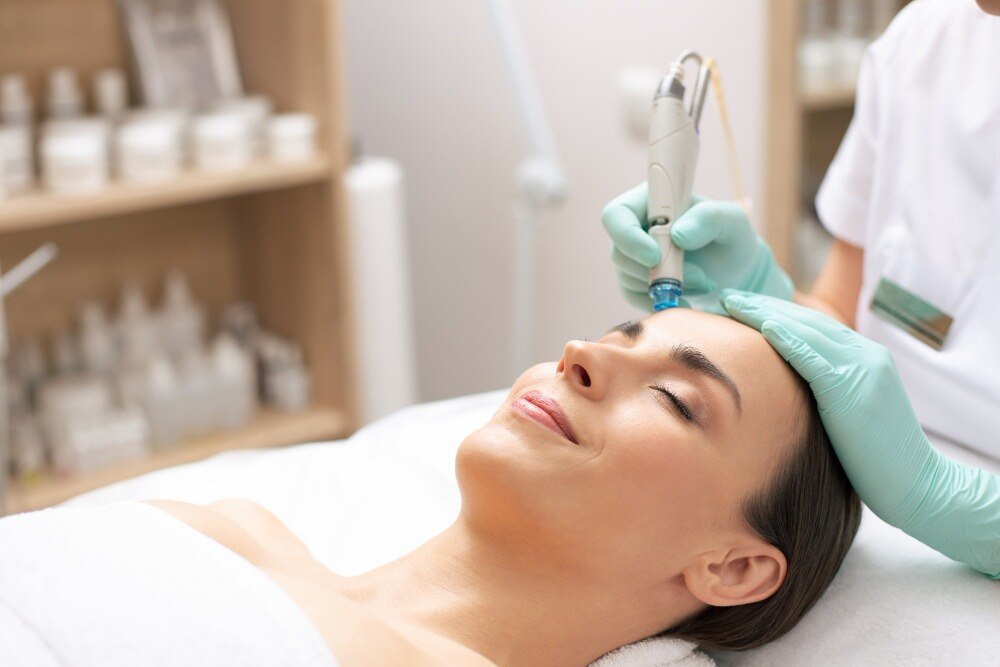
Oil, blackheads, rough surface scale, and temporary dehydration do not all respond to the same step of a Hydrafacial session. By understanding the device, solutions, preparation, aftercare, and limits of the procedure, you can decide whether it suits your skin and compare providers more safely.
Key takeaways
- Ask which Hydrafacial solutions, tip, suction level, and number of passes will be used.
- Avoid retinoids, exfoliating acids, waxing, and intense sun exposure before treatment.
- Expect a cooling, wet suction sensation rather than painful extraction.
- Compare providers by consultation quality, product traceability, hygiene, and aftercare instructions.
What happens during a Hydrafacial session, step by step
A Hydrafacial session usually follows five Hydrafacial steps, but the fluids, suction, tip, and number of passes vary between providers.
1. Cleansing removes surface oil, makeup, sweat, and residue. This prepares intact skin for the later steps rather than treating acne below the surface.
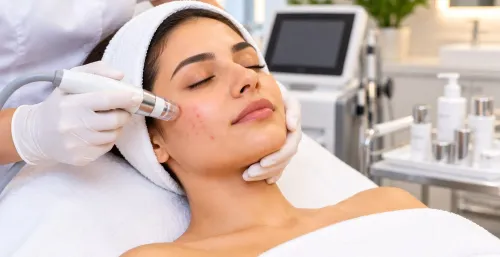
2. Exfoliation loosens dead cells with a textured tip and liquid solution. The handpiece creates a vortex of fluid and suction instead of pressing a dry abrasive directly against your skin.
3. A peel may use glycolic acid, salicylic acid, or both. Glycolic acid loosens surface bonds, while salicylic acid helps dissolve oil within accessible pores; contact time and rinsing affect irritation.
4. Vacuum-assisted extraction lifts some accessible sebum, surface debris, and comedonal material. You may feel rhythmic pulling or pressure around the nose and chin, but strong pain is a reason to ask the operator to reduce suction or stop.
5. Infusion applies products such as hyaluronic acid and antioxidants after the surface steps. Cooling fluid, light scraping, and wet pressure are common sensations.
“Deep cleansing” means removing surface debris and some accessible blackhead material. It does not clean below the viable epidermis, remove toxins, permanently shrink pores, or correct the causes of acne and oil production. Ask for the exact treatment sequence, solutions, suction level, number of passes, and peel contact time before consenting.
Which solutions are used, and how long do the results last?
Expect smoother, temporarily plumper skin rather than a permanent change. Glycolic acid is an alpha-hydroxy acid that loosens bonds between surface cells, while salicylic acid is a beta-hydroxy acid that suits oily or comedonal skin by working within oil-rich debris.
| Solution | Main role | Important limitation |
|---|---|---|
| Glycolic acid | Surface exfoliation and smoother texture | Can sting, especially at higher strength or low pH |
| Salicylic acid | Loosens oil and comedonal material | Does not treat persistent, cystic, inflammatory, or scarring acne |
| Hyaluronic acid | Binds water at the skin surface | Provides temporary hydration rather than lasting water retention |
| Antioxidants | Support the infusion step and help protect against oxidative stress | Do not replace treatment for pigmentation, acne, or barrier damage |
Concentration, pH, contact time, and rinsing determine irritation more reliably than a label such as “mild peel.” After exfoliation, even a normally tolerable serum can sting because the surface barrier has been temporarily disturbed.
The visible improvement commonly lasts from several days to a few weeks. The stratum corneum accumulates again, so smoothness and surface hydration fade; these solutions do not rebuild a damaged barrier or permanently increase the skin’s water content.
Most appointments take about 30 to 60 minutes. Confirm the timing if the provider adds a peel, mask, or light treatment. Evidence specific to Hydrafacial remains limited: studies are usually small and short-term, and combined protocols make it difficult to identify which step produced the change.
How to prepare and decide whether treatment is appropriate
Treatment is appropriate only on calm, intact skin after a clinician reviews your products, medicines, skin conditions, and scarring history. “Non-invasive” does not mean risk-free: suction pressure, abrasive-tip friction, peel formulation, and operator technique all affect the result.
1. Ask whether to pause retinoids, glycolic acid, salicylic acid, scrubs, and other exfoliating acids before Hydrafacial preparation. The correct pause depends on the product’s strength, how often you use it, and your skin’s response.
2. Avoid waxing and threading close to the appointment. Recently irritated skin can sting, tear, or react more strongly to suction.
3. Postpone treatment over sunburn, active dermatitis, open wounds, herpes lesions, or a bacterial or fungal facial infection. Do not deliberately tan before treatment.
4. Tell the clinician about recent isotretinoin, laser treatment or resurfacing, anticoagulants, easy bruising, abnormal pigmentation, or raised and poorly healing scars. These details can require postponement or fewer passes.
5. Discuss rosacea if you flush easily, have persistent redness or papules, or have experienced treatment-triggered flares. Friction, heat, acids, and suction can worsen rosacea, so an alternative or conservative protocol may be safer.
6. If you have darker skin, ask for conservative suction, fewer passes, and treatment only on calm skin. Superficial exfoliation is less aggressive than deep resurfacing, but excessive inflammation can still cause post-inflammatory hyperpigmentation.
Confirm the peel ingredients, abrasive tip, suction setting, and planned passes before consenting. A gentle setting reduces risk; it does not remove it.
What the treatment feels like and what to do afterwards
Hydrafacial aftercare starts with knowing what is normal. Cleansing and infusion usually feel wet and cool; exfoliation can feel like fine brushing, while extraction creates repeated suction that feels stronger over congested areas. Mild redness, tightness, stinging, dryness, or sensitivity can follow, particularly after acid exposure or extractions.
For the first period specified by your provider:
- Apply broad-spectrum sunscreen with SPF 30 or higher, seek shade, and avoid deliberate tanning. Exfoliation and inflammation increase the chance of lingering discoloration.
- Avoid heat exposure, including hot showers, saunas, steam rooms, and intense exercise, while redness or stinging remains.
- Wash with a bland cleanser and apply a plain moisturizer.
- Avoid retinoids, strong acids, fragranced products, essential oils, and abrasive scrubs until your skin feels settled or the clinician clears them.
- Delay makeup after treatment until sensitivity has eased, then ask when it is appropriate for your skin and the products used.
- Contact the provider rather than continuing routine home care if you notice pinpoint bleeding, bruising, marked swelling, or worsening pain.
Do not add a new active serum immediately after infusion. A temporarily disturbed skin barrier can make a normally tolerable ingredient sting, especially when the product contains fragrance, essential oils, retinoids, or acids. If your provider gives different instructions for a peel, sensitive skin, or a reaction, follow that specific plan.
How often to schedule treatment and how to compare providers
Repeated sessions are worthwhile only when your skin has recovered and the temporary benefit justifies the time, cost, and irritation risk. Hydrafacial frequency has no universal rule: peel strength, suction, skin condition, and your response determine the treatment schedule.
A provider may recommend spacing appointments several weeks apart. Do not repeat treatment while redness, dryness, sensitivity, bruising, or active inflammation remains; repeated passes over unsettled skin can prolong irritation.
Before booking, use these provider questions:
- Which device and handpiece will you use?
- What suction setting and number of passes are planned?
- What are the solution names, acid concentrations, pH, and peel contact time?
- Will you extract every visible blackhead, or stop when the skin shows irritation?
- How will you document redness, sensitivity, or other reactions?
- What changes if you have rosacea, acne, melasma, eczema, easy bruising, or persistent inflammation?
| Provider approach | What you should hear | Warning sign |
|---|---|---|
| Cautious consultation | Screening, conservative settings, intact skin only, and follow-up | Treatment begins without reviewing skin disease or medicines |
| Evidence-based claims | Temporary smoothing and hydration, with deep cleansing limits explained | Promise of pore removal or permanent hydration |
| Individual plan | An alternative for persistent, cystic, scarring, or inflamed acne | Cosmetic extraction presented as acne treatment |
For a medically assessed plan in Pune, Derma Elementts 08048039637 is one clinic you can question about screening, solution selection, conservative settings, and follow-up. Compare explanations, not ingredient-list length. A provider who explains risks and offers an evidence-based alternative is a safer choice than one selling guaranteed results.
Frequently asked questions
What happens during a Hydrafacial session?
The session uses cleansing, exfoliation, vacuum-assisted extraction, and serum infusion, with steps and passes varying by provider.
Which solutions are used in a Hydrafacial?
Providers may use cleansing, exfoliating, extraction, and hydrating solutions. Ask for the product names and ingredients before treatment.
How long do Hydrafacial results last?
Results vary with your skin, the solutions used, and your routine. Ask when your provider expects the effect to fade and recommends repeating treatment.
How should you prepare for a Hydrafacial?
Tell the provider about skin conditions, medicines, active irritation, recent procedures, and products such as retinoids or exfoliating acids.
What does a Hydrafacial feel like, and what should you do afterwards?
Expect cleansing, light exfoliation, fluid application, and suction across the skin. Follow the provider’s advice on sun protection and temporarily avoiding irritating products.