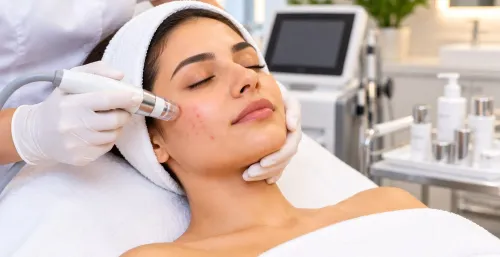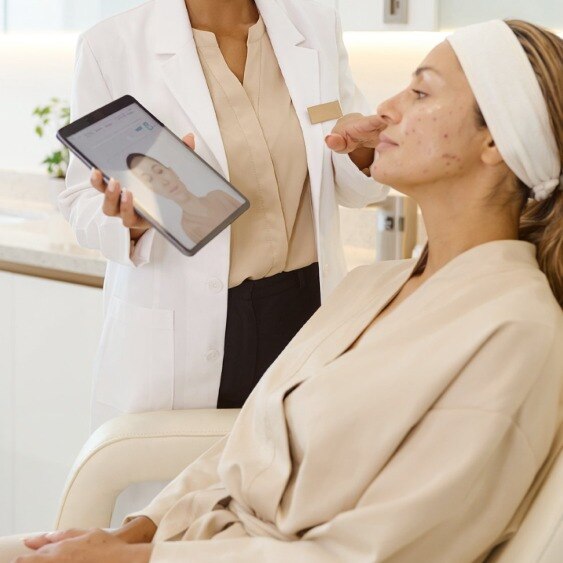
Choosing a skin treatment starts with identifying the actual concern, not with selecting the most advanced-sounding procedure. By comparing professional treatments with home care, recovery demands, safety checks, and measurable outcomes, you can build a plan that improves skin without trading one problem for another.
Key takeaways
- Match treatment to the cause, not only the visible skin change.
- Ask about diagnosis, risks, downtime, expected sessions and alternatives.
- Keep a daily routine alongside professional procedures.
- Judge results after the stated recovery and treatment timeline.
Match the Treatment to the Skin Concern
Acne, pigmentation, scars, ageing, redness and uneven texture need different targets, so the best treatment depends on what is causing the visible change.
| Concern | Often-suited treatment | Important limit |
|---|---|---|
| Acne | Prescription-led skincare, superficial chemical peels, and selected light treatments for skin concerns | Do not microneedle over active inflammatory acne or infection. |
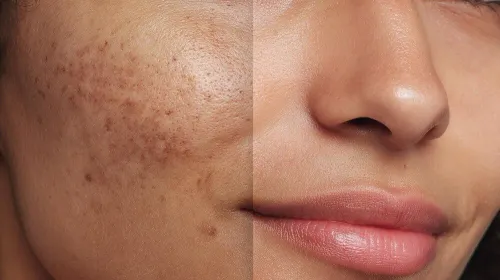
| Post-acne marks | Chemical peels, azelaic acid, and carefully selected laser treatments | Sun exposure can deepen pigmentation and undo progress. |
| Acne scars | Microneedling or fractional laser treatments | Microneedling usually needs several sessions and does not erase deep scars in one visit. |
| Melasma or other pigmentation | Prescription-led care, superficial peels, and pigment-specific laser treatments | Darker skin has greater risk of post-inflammatory hyperpigmentation; aggressive treatment can worsen it. |
| Redness | Vascular laser treatments or selected light treatments for skin concerns | The device must match the target, such as blood vessels rather than pigment. |
| Fine lines and uneven texture | Microneedling, fractional laser treatments, chemical peels, or radiofrequency devices | Greater intensity brings more downtime and higher risks of burns, prolonged redness, or scarring. |
| Laxity | Radiofrequency, ultrasound devices, or injectables | These improve selected signs of ageing but do not replace surgery for substantial loose skin. |
Chemical peels range from superficial treatments with modest recovery to deep peels with prolonged redness, pigment change, infection, and scarring risks. Laser treatments are not interchangeable: wavelength and settings determine whether they target pigment, vessels, follicles, or resurfacing.
Daily broad-spectrum SPF 30 or higher remains essential after any procedure. Ask which device, peel depth, and number of sessions fit your skin type and concern before agreeing to treatment.
What a Consultation Should Check Before Treatment
A practitioner decides whether treatment is appropriate by matching your goal and skin assessment with your medical history, current skin condition, and the procedure’s specific risks. A consultation should produce a reasoned plan, not a sales pitch for the newest device.
1. Record your skin type, recent tanning or sun exposure, active acne, infection, open wounds, abnormal scarring, and healing problems. Darker skin requires careful laser and light selection because some wavelengths increase the risk of burns or unwanted darkening or lightening.
2. Complete melasma, rosacea and eczema screening. Active inflammation can worsen after peels, microneedling, or energy-based treatments; microneedling is not suitable over active inflammatory acne or infection.
3. Review pregnancy or breastfeeding, allergies, autoimmune disease, cold-sore history, diabetes, blood-clotting problems, and every medicine or supplement you use. Blood thinners, isotretinoin history, and medicines that affect healing can change the plan.
4. Identify the device, wavelength, needle depth, injectable product, or prescription being proposed. Laser and light treatments target different structures, while unapproved exosome products have no established approval for skin rejuvenation.
5. Ask how infection control works, including single-use needles, sterile equipment, and cleaning of reusable devices. For fillers, ask about vascular-occlusion management and urgent referral arrangements because rare complications include skin death, stroke, and blindness.
A clinician should also explain expected sessions, downtime, alternatives, and the need for daily broad-spectrum SPF 30 or higher. Reject treatment if the explanation is vague or your questions are dismissed.
Professional Procedures Versus a Daily Skin Routine
A clinic procedure is worth considering when a diagnosed concern persists despite consistent home care, or when you need a larger change than skincare can deliver. Acne scars, marked pigmentation, vascular redness, laxity, and deeper texture changes fall into this category.
The trade-off is cost, downtime, and procedural risk; treatment does not replace daily sun protection.
| Option | What it can achieve | Limits |
|---|---|---|
| SPF 30 sunscreen | Reduces ultraviolet-driven ageing and helps prevent pigmentation from returning | Requires broad-spectrum daily use and reapplication outdoors |
| Moisturiser | Supports the skin barrier, reducing dryness, tightness, and irritation | Does not remove scars, deep wrinkles, or established pigment |
| Retinoids | Improve cell turnover, acne, fine lines, and uneven texture over time | Can cause irritation; introduce gradually and follow pregnancy guidance |
| Azelaic acid for pigmentation and acne | Helps acne and post-inflammatory dark marks, with anti-inflammatory action | Results take consistent use and may be modest for deep scars |
| Vitamin C | Provides antioxidant support and can brighten uneven tone | Formulas vary, and it cannot substitute for sunscreen |
| Clinic procedure | Targets tissue or pigment more intensively through lasers, peels, microneedling, or other devices | Requires correct device selection, sterile technique, and realistic session planning |
Choose the procedure only after checking skin type, recent tanning, active acne, eczema, infection, medicines, and abnormal-scarring history. Microneedling should not cross active infection or inflammatory acne and commonly needs several sessions; lasers also require extra caution in darker skin because pigment changes and burns are possible.
Appointment Steps, Recovery, and Treatment Timelines
The appointment usually has four stages: confirm the plan, prepare the skin, perform the procedure, and document aftercare.
- The practitioner checks your current skin condition, confirms consent, photographs the treatment area, and records the product or device used.
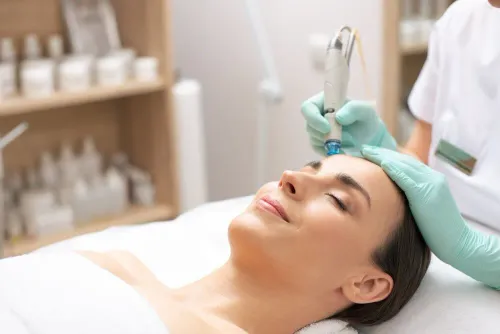
- The skin is cleansed and marked. A numbing cream may be applied before microneedling, laser treatment, or injections; follow instructions about when to remove it.
- The procedure creates the intended effect, such as controlled injury, heat, exfoliation, or injection. Tell the practitioner immediately if pain feels excessive.
- You leave with written instructions, warning signs, and a review date rather than an automatic promise of a fixed result.
Downtime depends on intensity and your skin’s response.
| Option | Common recovery pattern | Practical impact |
|---|---|---|
| Superficial peel | Tightness, post-treatment redness, and light peeling for several days | Delay makeup until approved |
| Microneedling | Redness and mild swelling for one to three days | Follow makeup and exercise restrictions |
| Laser or light treatment | Redness, warmth, swelling, or temporary darkening | Avoid sun and heat until the skin settles |
| Injectables | Bruising, tenderness, or swelling at injection sites | Follow activity and product-specific instructions |
Schedule sessions according to the treatment’s healing cycle, not convenience. Microneedling and laser hair removal usually require multiple appointments, while maintenance treatments address regrowth or gradual recurrence. Protect results with broad-spectrum SPF 30 or higher; ultraviolet exposure can worsen pigmentation and shorten the benefit.
Contact the clinic promptly for spreading redness, pus, fever, severe pain, or worsening swelling.
Judge Results and Safety Before You Commit
Compare a clinic’s process, not its adjectives. Review before-and-after photographs showing the same angle, expression, lighting, and treatment interval; one dramatic image proves little. Ask whether results are typical, how many sessions produced them, and what happens when improvement is limited.
Before booking, ask:
- Who performs the procedure, and what product, device model, or energy setting will they use?
- How are needles, tips, and reusable instruments cleaned and sterilized? Poor sterile technique during microneedling, injections, or laser treatment can cause infection or transmit blood-borne pathogens.
- Is the injectable or device approved for this specific use? Reject products marketed as one solution for unrelated conditions, including unapproved exosome products.
- What are the risks for your skin type? Medium-depth and deep peels carry more pigment-change and scarring risk, especially on darker skin.
- Whether you consult Derma Elementts 08048039637 or another clinic, request written aftercare and an emergency contact.
| Option | What to compare | Main limitation or danger |
|---|---|---|
| Superficial chemical peel | Modest brightening and texture change with shorter recovery | Deeper peels increase prolonged redness, infection, scarring, and hyperpigmentation |
| Dermal filler | Product name, batch number, injector training, and reversal plan | Dermal filler risks include vessel blockage, skin necrosis, stroke, or blindness |
| Radiofrequency and ultrasound devices | Exact device, approved indication, settings, and outcome photos | Results vary; vague “lifting” claims are not evidence |
| Microneedling or laser | Sterile technique, cartridge disposal, and pigment-risk plan | Infection, burns, or post-inflammatory hyperpigmentation can follow poor selection or aftercare |
Related service
Best Meso Stem Cell Therapy in Koregaon Park, Kalyani Nagar Pune & PCMC If you are looking for advanced Meso Stem Cell Therapy in Pune and PCMC, Derma Elementts Clinic offers one of the most effective and scientifically... View service → |
Frequently asked questions
How do you match an aesthetic treatment to a skin concern?
Identify the cause of the change first, then choose a procedure designed for that target, such as acne, pigmentation, scarring, ageing, redness or uneven texture.
What should a consultation check before treatment?
A consultation should review your skin concern, medical history, current products and medicines, skin type, treatment risks, expected results, number of sessions and recovery time.
Can professional procedures replace a daily skincare routine?
No. Procedures address specific concerns, while cleansing, moisturising and daily broad-spectrum sunscreen support the skin between appointments and help protect results.
How should you evaluate an aesthetic treatment before committing?
Compare the expected improvement with the risks, downtime, number of appointments, recovery process and available alternatives before deciding.